The production-linked incentive (PLI) scheme for the automobile sector has created market distortions, excluded innovation-led electric two-wheeler (e2w) makers, and failed to convert cost advantages into export competitiveness, with 77 per cent of export volumes driven by non-PLI models, said a report released by the Centre for Domestic Economy Policy Research (C-DEP) on Friday.

Mastercard and Visa are introducing passkeys that will allow users to authenticate card payments with face scans or fingerprints, eliminating the need for one-time passwords (OTPs).

French automotive component maker Valeo on Wednesday said it will invest over Rs 2,150 crore in India and treble its annual sales in the country to around Rs 7,510 crore by 2028.

JSW MG Motor India will launch four new models this year, and is planning to invest between 3,000 crore-4,000 crore in the country over the next couple of years. The new models include a plug-in hybrid, an electric vehicle, the Majestor SUV and one additional model yet to be disclosed.

This would imply a 29 per cent year-on-year rise, significantly lower than growth rates seen in recent years.
'We have been insisting that all Boeing 787 aircraft be grounded and checked for the electrical systems.'
Investors and startup executives are calling for extending the period for an entity to be recognised as a startup from 10 to 15 years for deep-tech companies.

At present, e-mobike penetration in India is close to negligible, unlike the scooter segment, where electric scooters account for nearly 20 per cent of sales.

As India's biggest Unified Payments Interface (UPI) app PhonePe prepares to list, the updated draft red herring prospectus (DRHP) shows the impact of regulations on the business, and concentration of payments-linked revenue even as UPI lacks MDR (merchant discount rate).
'During the meeting with DGCA on Monday, IndiGo assured operational stability and no flight cancellations after February 10, 2026, based on the current approved network, above (sufficient) crew strength.'

IndiGo has informed DGCA that 'all refunds for IndiGo flight cancellations during the period of December 3-5 have been fully processed and cleared to the original source of payment.'

Moving beyond digital payments, the National Payments Corporation of India (NPCI), the operator of Unified Payments Interface, is planning to add more muscle to the country's digital infrastructure by setting up a fourth subsidiary, NPCI Tech Solutions Ltd (NTSL).
Three additional vehicle makers and five more auto component makers will begin availing financial incentives under the production-linked incentive (PLI) scheme for the automobile sector from 2026-27 (FY27) onwards, Hanif Qureshi, additional secretary at the Ministry of Heavy Industries (MHI), said on Wednesday.

The partnership strengthens HMC's presence in global cricket, marking its return to the sport after its earlier association with the ICC between 2011 and 2015.

The DGCA has formed two specialised teams to internally monitor IndiGo's daily operations.

'I don't think it is right to remove him over one lapse. The focus should be on restoring operations, not on removing a key management personnel.'
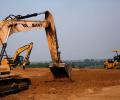
The Indian government should urgently consider imposing safeguard or anti-dumping duties on imports of two construction equipment segments - crawler excavators and tower cranes - as Chinese companies are rapidly expanding their presence in these markets in India through 'predatory' pricing supported by lower raw material costs, substantial export subsidies, and extended credit schemes, said Sorab Agarwal, executive director at Action Construction Equipment (ACE).

Fino Payments Bank (Fino) has become the first such entity to get an in-principle approval from the Reserve Bank of India (RBI) to transition into a small finance bank (SFB).
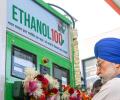
As of now, no firm has launched a flex-fuel vehicle in India, as these models are more expensive than comparable petrol-run vehicles.

In absolute terms, both types of cars must cut emissions by about 28-29 g/km. But in percentage terms, the lighter 900-kg car must reduce emissions by 27 per cent, while the 1,500-kg car needs a 22 per cent cut. And the target becomes progressively stringent for both -- but, once again, the tightening is sharper for the 900-kg car than for the 1500-kg car.
 © 2026 Rediff.com - Investor Information - Advertise with us - Disclaimer - Privacy Policy - Sitemap - Feedback - About us - Terms of use - Grievances